Via Cianderies, 10 32043 Cortina d’Ampezzo (BL)
P. IVA 11041551216
vittogiusti@vittogiusti.art
“It is much easier to accuse contemporary art of being esoteric, hermetic and self-indulgent, than to try to convey its meaning to the public.”
—Nena Dimitrijevic, ‘Un Certain Engagement’, Art Monthly 31, 1979
This project departs from the many ways the word ‘esoteric’ appears in contemporary art; at times descriptive, derisive or even defensive. Drawing on the Greek esoterikos, (meaning belonging to an inner circle), we compare esoteric groups and curatorial practice, considering how contemporary art operates through opaque structures of specialist access: who is admitted, who is excluded and by what invisible architectures these thresholds are maintained.
Both esoteric and curatorial practices involve organised groups, with secret societies on one side and institutions on the other. Both involve specialised frameworks for understanding their activities. And both are oriented towards the attainment of power, whether through transcendence or artistic affect.
We’re not collapsing the two or saying the art world is literally a cult, though the question is worth sitting with. What we’re doing is using this parallel to ask: what does curatorial practice keep in the dark and who does that serve? If curatorial practice is knowledge-production, does it also produce secrets?
Art Monthly is a key site for exploring these questions. Reading through its archive, we noticed how much was assumed rather than explained, the most interesting things left implied, offthe page, between the lines. In that sense, the magazine becomes esoteric itself.
Our invited practitioners, performance artist Charlie Jimenez and curator/artist Felix Ashford, work from within structures of opacity, ritual and secrecy. Not only as aesthetic choices, but as onto-epistemological frameworks that deeply shape the cores of their practices and beings.
The project asks what happens when those positions meet curatorial practice. Our methodology was inspired by Bagua, a Chinese cosmological system organising the world through eight trigrams and their relational forces. Drawing on this framework, we structured the project around eight keywords: generate, exchange, sustain, test, interrupt, index, refuse, recast. These keywords act as open invitations to move through meanings rather than arrive at them.
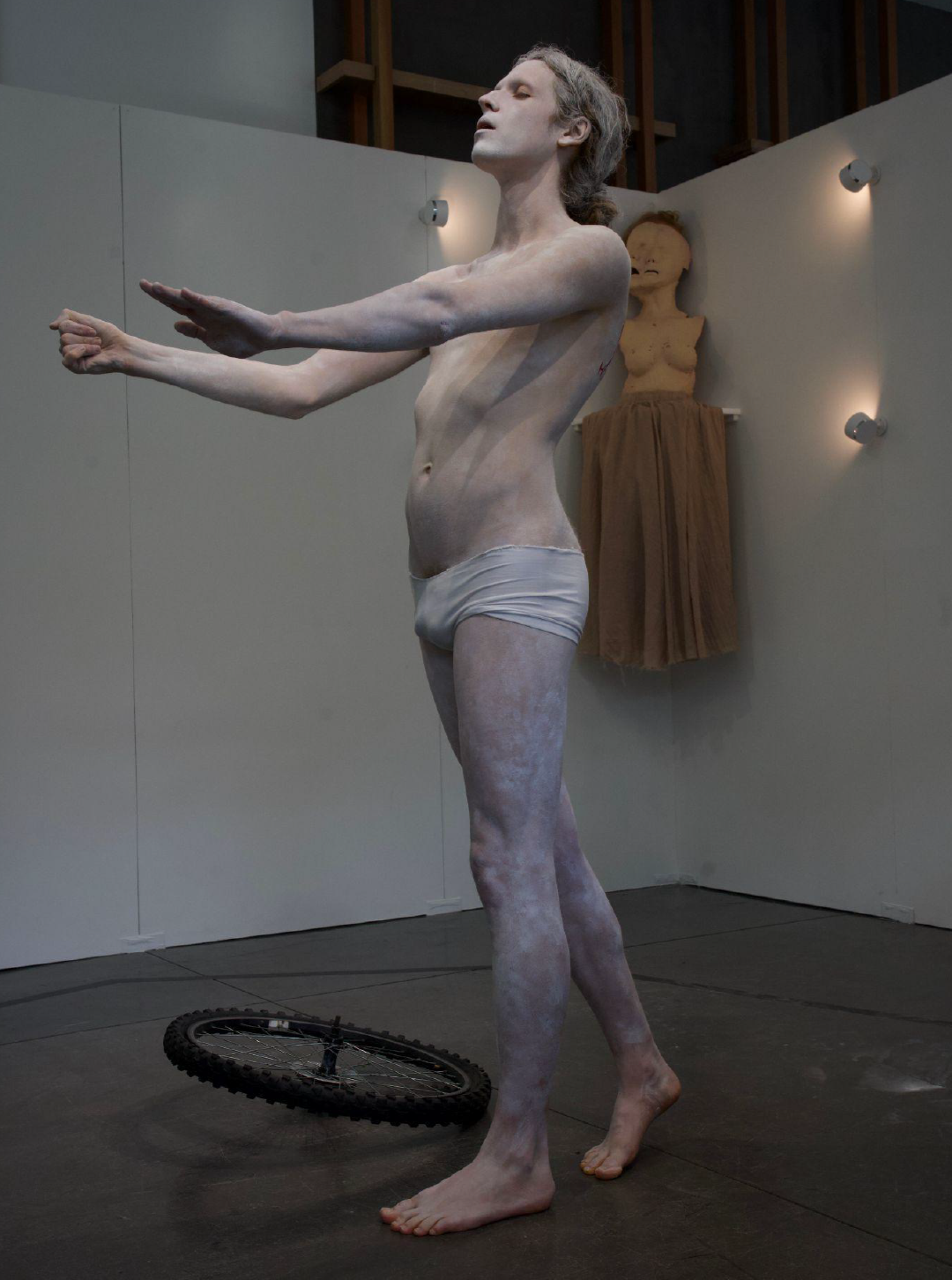
Responding to the prompts, Jimenez presents Octagon, an unfolding, durational performance in a ‘ritual zone’ – a space that is at once choreographic, cosmological and ceremonial. Ashford has developed spell-diagrams off-site, displacing activation
beyond the immediately visible exhibition space, that challenge the conditions of access that determine what counts as participation, presence or witness.
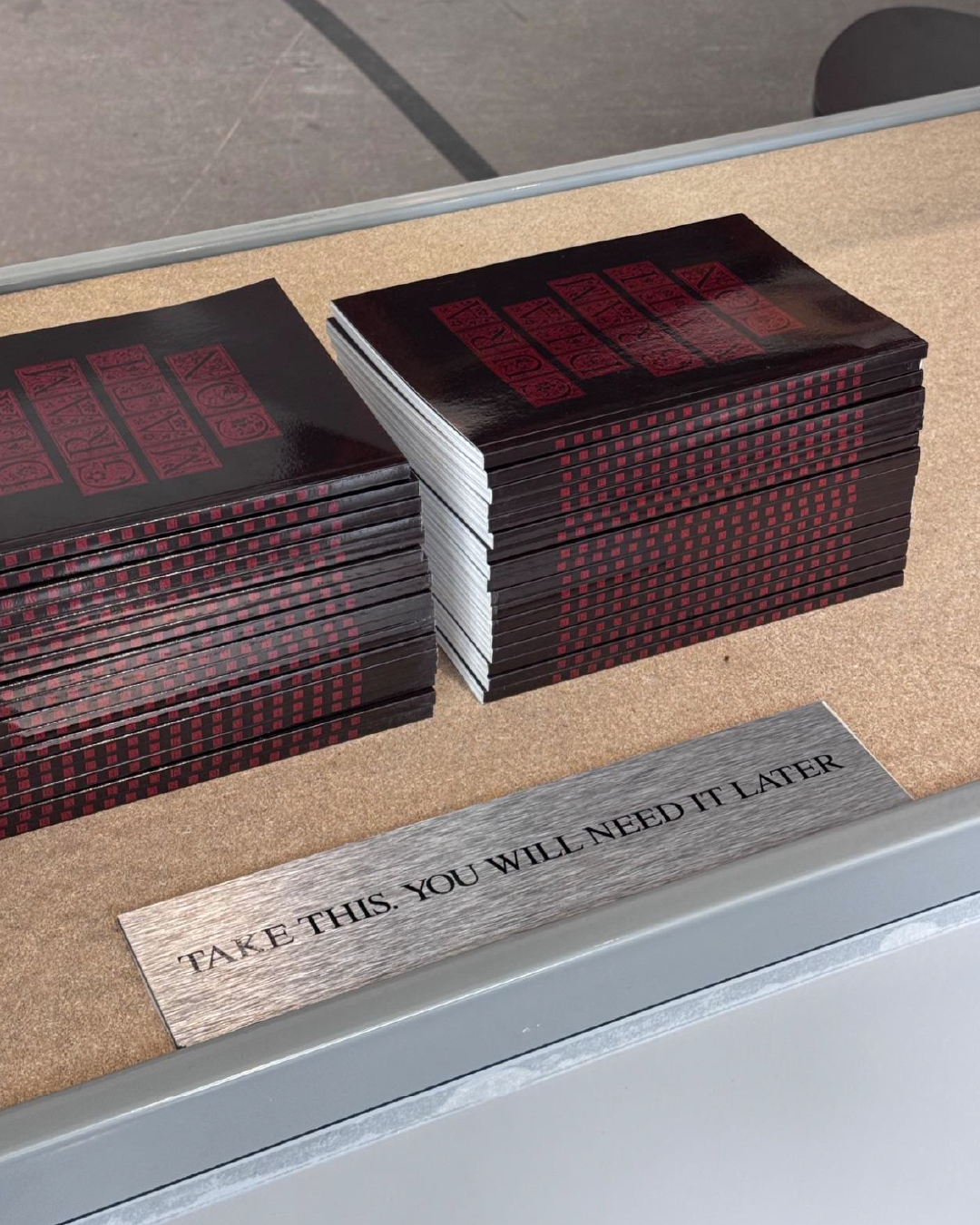
At the threshold between esoteric infrastructure and curatorial methodology is this grimoire: a book of spells. We’d like to stress here that grimoire derives from the Old French word gramaire, meaning grammar. Thus, it serves simultaneously as catalogue, exhibition text and blueprint of our research. It extends outwards, inwards and into the hands of whomever receives it.
The grimoire contains Ashford’s diagrams and a series of essays that expand upon themes encountered as part of our research journey. These texts are meant to open a field of related positions, rather than provide singular interpretations. They resist the digestibility that institutional contexts often demand. In return, they ask for a willingness to sit with what is not immediately legible, to follow a thread without being assured of where it leads. They are to be taken at your discretion.
We thus enact opacity, as a refusal of the false clarity that flattens complexity into consumption. What you hold is not a document of something that has already happened, but a site in which something may occur.